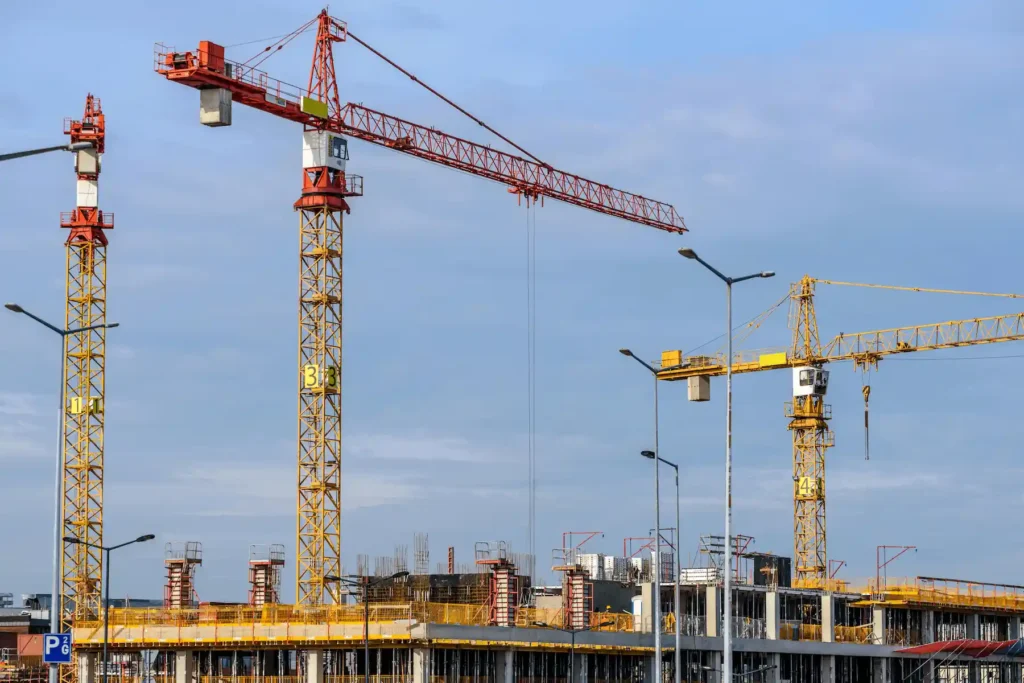
Different Types of Cranes

By admin
October 2, 2024
Industrial Real Estate Valuation Services in Dubai

Cranes are the unsung heroes of construction sites, manufacturing plants, and industrial facilities. These towering machines play a crucial role in lifting and moving heavy materials with precision and efficiency. From skyscrapers to bridges, cranes make massive projects possible, transforming blueprints into reality.

But did you know that there’s a world of different crane types tailored for specific applications? Whether it’s a tower crane reaching new heights or a mobile crane navigating tight spaces, each type serves its unique purpose. Understanding these variations is key to maximizing productivity in any project.

In this comprehensive guide, we’ll dive deep into the diverse types of cranes available today and their specific applications. We’ll also touch on important aspects like asset valuations related to machinery and equipment—ensuring you have all the knowledge needed for informed decisions about your assets. Join us as we explore how these incredible machines contribute not just to construction but also to various industries worldwide!

Comprehensive Guide to Different Types of Cranes and Their Applications

Cranes come in various types, each designed for specific tasks. Tower cranes are iconic on city skylines, towering above skyscrapers and providing exceptional height and stability. They excel at lifting heavy materials vertically, making them indispensable for large construction projects.

Mobile cranes offer flexibility with their ability to move around job sites easily. These versatile machines can navigate tight spaces while still handling substantial loads. Their adaptability makes them ideal for smaller projects or changing environments.

For more specialized needs, there are gantry cranes that operate on tracks, typically found in shipping yards or manufacturing plants. They facilitate the loading and unloading of goods efficiently, streamlining operations where space is limited. Each crane type plays a pivotal role in its respective application, enhancing productivity across various industries.

Plant, Machinery & Equipment Valuations

Plant, machinery, and equipment valuations play a crucial role in various industries. These assessments provide an accurate estimate of the value of assets, helping businesses make informed decisions about sales, purchases, or leasing. Understanding the true worth of your machinery can significantly affect operational strategy.

Accurate valuations are essential for financial reporting and compliance requirements. Businesses often need to demonstrate asset values for audits or tax purposes. This transparency not only strengthens financial health but also builds trust with stakeholders.

In addition to financial reasons, knowing the value of plant and machinery aids in risk management. It helps companies navigate market fluctuations effectively and plan future investments wisely. With reliable valuation services, organizations can ensure they are making sound choices that support growth and sustainability.

Get a Quote

Getting a quote for equipment valuation services is an essential step in understanding the worth of your machinery. It’s a straightforward process that begins with sharing details about your assets. Most valuation service providers will require information such as make, model, age, and condition.

Once you submit this data, experts will assess it to give you an accurate estimate tailored to your needs. A precise quote reflects not just market value but also potential depreciation factors that could affect pricing over time. This transparency helps businesses make informed financial decisions.

Additionally, many companies offer online tools or consultation calls for quotes. These options provide flexibility and convenience while ensuring you have all the necessary information at hand. Getting timely quotes can streamline operations and enhance planning efforts moving forward.

Asset Valuations for Different Industries

Asset valuations play a vital role across various industries, as each sector has unique requirements and standards. For instance, construction relies heavily on the accurate assessment of cranes, excavators, and other machinery to determine their market value. These values guide purchasing decisions and help in setting rental prices.

The manufacturing industry also demands rigorous asset valuations for equipment such as assembly lines and robotics. Knowing the true worth of these assets aids businesses in optimizing operations while ensuring they remain competitive in a fast-evolving marketplace.

In the healthcare sector, specialized equipment like MRI machines or surgical instruments must be assessed accurately to maintain compliance with regulations. Valuation helps hospitals manage their financial resources effectively while providing top-notch patient care through reliable technology investments. Each industry requires tailored valuation strategies that reflect its specific needs and operational dynamics.

Importance of Asset Valuations

Asset valuations play a crucial role in various industries, providing a clear picture of an organization’s financial health. Understanding the true worth of assets allows businesses to make informed decisions regarding investments and resource allocation. It is essential for maintaining competitive advantage.

Accurate asset valuations also help companies secure financing. Lenders often require detailed appraisals to assess risk before approving loans or credit lines. A well-documented valuation can enhance credibility and ensure better terms during negotiations.

Additionally, regular evaluation supports compliance with accounting standards and regulations. Businesses need to report their assets accurately for tax purposes and shareholder confidence. By investing in thorough asset valuations, organizations protect themselves from potential legal issues while strategically positioning for growth opportunities.

Trusted Knowledge in Asset Valuations

When it comes to asset valuations, having trusted knowledge is essential. Accurate assessments rely on a deep understanding of market trends, equipment types, and industry standards. Experienced professionals bring a wealth of insights that can guide businesses through complex valuation processes.

Trusted valuations are not just about numbers; they reflect the nuances of each sector. Various industries have unique requirements and varying depreciation rates for their machinery and equipment. Knowledgeable valuators tailor their approach based on specific asset characteristics.

Furthermore, staying updated with regulatory changes is crucial. A reliable valuation service provider ensures compliance with all relevant laws while delivering precise evaluations. This expertise fosters confidence among clients who depend on accurate data for strategic decision-making.

Leading Asset Valuation Service Providers

When it comes to asset valuation, choosing the right service provider is crucial. Leading companies in this field offer a blend of expertise, technology, and industry knowledge that sets them apart. These providers typically have a team of skilled professionals who understand the complexities involved in valuing various assets.

Many top firms use advanced methodologies and software tools to ensure accuracy in their valuations. They stay updated with market trends and regulatory changes, which impacts the overall value assessments they provide. This attention to detail helps businesses make informed decisions regarding their equipment or machinery.

Additionally, reputable asset valuation service providers often cater to multiple industries. Whether it’s construction, manufacturing, or healthcare, they tailor their services to meet specific sector needs. Their commitment to delivering reliable valuations enhances trust between clients and stakeholders alike.

Understanding Valuation Services for Machinery and Equipment

Valuation services for machinery and equipment are essential in understanding the true worth of your assets. These services help businesses determine their equipment’s market value, which is vital for making informed financial decisions. Whether you’re looking to buy, sell, or lease, accurate valuations provide insight into potential profitability.

Professionals in this field utilize various methods to assess value. They consider factors such as age, condition, brand reputation, and current market demand. This comprehensive approach ensures that stakeholders receive a realistic picture of their assets’ worth.

Moreover, these valuation reports can be crucial during audits or mergers and acquisitions. Accurate assessments can facilitate smoother transactions by providing clear documentation of asset values. Understanding this process empowers businesses to leverage their machinery effectively in an ever-changing marketplace.

Different Types of Valuation Services Offered

Valuation services are tailored to meet the specific needs of various clients. For businesses looking to understand their asset worth, financial reporting valuations provide a clear picture for stakeholders. This type of valuation often incorporates market conditions and industry trends, ensuring accuracy.

Another common service is the insurance appraisal, which determines an asset’s replacement cost. This protects businesses from unexpected losses by ensuring they have adequate coverage in place. It’s essential for companies with significant investments in machinery or equipment.

There are also liquidation appraisals that focus on determining an item’s value when it must be sold quickly. These assessments help organizations strategize effectively during downsizing or closing operations, maximizing potential returns while minimizing losses. Each service plays a vital role in guiding business decisions across diverse industries.

Focus Areas of Machinery & Equipment Valuation

When it comes to machinery and equipment valuation, several key focus areas come into play. First, understanding the condition of the equipment is crucial. Wear and tear can significantly impact value, so a thorough inspection is often necessary.

Next, market trends play an essential role in determining worth. Equipment values fluctuate based on demand and technological advancements. Staying updated with industry changes helps ensure accurate valuations.

Proper documentation cannot be overlooked. Records of maintenance, repairs, and previous valuations add credibility to the assessment process. This information provides insights that help appraisers gauge current market value more effectively.

Case Studies and Insights in Machinery Valuation

Case studies in machinery valuation provide a valuable lens through which businesses can understand the intricacies of assessing equipment worth. These real-world examples highlight various industries, showcasing how specific assets were appraised to meet diverse needs, from financial reporting to sales or acquisitions.

Insights gleaned from these cases often reveal best practices and pitfalls. For instance, an overlooked feature of machinery might dramatically alter its market value. Analyzing such scenarios helps professionals refine their approaches and methodologies.

Moreover, successful valuations lead not just to accurate price assessments but also foster strategic decision-making for businesses looking to optimize their operations. The lessons learned are instrumental in creating tailored solutions that resonate with unique business requirements across different sectors.

Machinery and Business Assets Valuations and Disposals

Valuing machinery and business assets is crucial for any organization. It involves assessing the current market worth of equipment, tools, and other resources owned by a business. Accurate valuations help companies make informed decisions about selling, leasing, or upgrading their assets.

Disposals can be challenging yet rewarding when managed effectively. Understanding the value of your machinery allows you to maximize returns during sales or auctions. Businesses often face hurdles in determining fair prices; thus, professional valuation services become invaluable.

Employing experienced appraisers ensures transparency and accuracy throughout the disposal process. They provide insights into market trends and depreciation rates that directly impact asset values. This expertise not only simplifies transactions but also contributes to better financial planning for future investments.

Services Offered in Business Assets Valuations

Business asset valuations encompass a wide range of services tailored to meet the specific needs of companies. These services include appraisals for various assets, such as machinery, equipment, and real estate. Each valuation is conducted with meticulous attention to detail, ensuring that every factor influencing value is considered.

Another essential service involves consulting on asset management strategies. Professionals guide businesses on optimizing their assets for better performance or potential sale opportunities. Understanding how different factors impact overall value can lead to smarter decisions.

There are specialized evaluations for mergers and acquisitions. Accurate business asset valuations play a crucial role in negotiations and financing arrangements during these transactions. This ensures that all parties have a clear understanding of what’s at stake before proceeding further.

Success Stories in Business Assets Auctions

Success stories in business asset auctions reveal the potential for significant returns. Companies have turned to auctions as a way to liquidate surplus machinery or equipment efficiently. These events often attract competitive bids, leading to prices that surpass initial expectations.

One notable example includes a construction firm that auctioned off its excess fleet of cranes and heavy machinery. With strategic marketing, they drew interest from various bidders, resulting in a sale that exceeded their valuation estimates by over 30%. Such outcomes demonstrate the power of targeted advertising and thorough appraisal processes.

Another success story features an industrial manufacturer who needed quick capital infusion. By partnering with experienced auctioneers specializing in equipment valuation services, they managed to sell outdated assets swiftly while maximizing value. The result was not only financial relief but also streamlined operations moving forward.

Key Professionals in Business Assets Valuations

When it comes to business asset valuations, having the right professionals on your side can make all the difference. These experts bring a wealth of knowledge and experience that ensures accurate assessments of machinery and equipment values.

Valuation specialists understand industry trends and market dynamics, allowing them to provide insights tailored to specific sectors. Their expertise not only aids in establishing fair prices but also enhances decision-making regarding purchases or sales.

Additionally, these key players often include certified appraisers who adhere to strict ethical standards while utilizing advanced methodologies. They are adept at navigating complex valuation scenarios, ensuring that every detail is accounted for.

Building relationships with trusted professionals in this field can lead to successful outcomes—whether you’re looking into financing options or preparing for an auction sale. The value they add extends beyond numbers; they offer strategic guidance based on comprehensive analysis and real-world examples from various industries.

Engaging with knowledgeable valuation experts ultimately helps businesses maximize their potential by accurately valuating their assets and making informed financial choices along the way.


MA

admin

Senior Valuer, Western VAS — RICS-qualified chartered surveyor.

Request a Call Back

Tell us about your requirement.
Related

More Insights

Industrial

All About Property Valuation in Dubai

Dubai’s real estate market is as dynamic as the city itself. With its stunning skyline, luxurious properties, and a thriving economy, it attracts investors from around the globe. But before diving into this vibrant market, understanding property valuation in Dubai becomes crucial. Accurately assessing your property’s worth can make all the difference whether you’re looking to buy, sell or invest.

Knowing what drives property values in this bustling metropolis opens up a world of opportunities. From residential villas to commercial spaces, every type of property has unique factors that influence its valuation. Whether you are new to the market or an experienced investor seeking insights on how to navigate it effectively, getting familiar with property valuation is essential for making informed decisions.

Let’s explore everything you need to know about obtaining an accurate property valuation in Dubai!

All About Property Valuation in Dubai

Property valuation in Dubai is a critical process that determines the market value of real estate. This evaluation is essential for various reasons, including buying, selling, refinancing, or investing.

The valuation considers many aspects such as location, property type, and current market trends. In a city known for its rapid growth and fluctuating prices, these factors are crucial in establishing an accurate worth.

Additionally, property valuations help buyers make informed decisions by ensuring they do not overpay. Sellers benefit from understanding the fair market price to attract potential buyers effectively.

Dubai offers multiple avenues for obtaining property valuations—from professional appraisers to online tools designed to provide quick estimates. Each method has its advantages depending on your needs and situation. Understanding this landscape empowers you as a stakeholder in Dubai’s real estate market.

How to Get the Correct Valuation of Your Property in Dubai?

Getting the correct property valuation in Dubai requires a strategic approach. Start by gathering all relevant documents related to your property, such as title deeds and previous valuations.

Next, consider local market trends. Understanding current demand and supply dynamics provides insight into pricing. Analyzing comparable properties can also help set realistic expectations for your own.

Engaging with professional valuers is crucial. They possess expertise that can yield an accurate assessment based on intricate factors, including location and amenities.

Utilizing online valuation tools offers another layer of assistance. These platforms leverage data to give you a preliminary estimate before seeking formal evaluations.

Don’t hesitate to seek multiple opinions from various sources. This practice ensures you have a holistic view of your property’s worth in the competitive Dubai real estate market.

How to Get the Correct Valuation of Your Property in Dubai?

Getting the correct valuation of your property in Dubai involves several steps. First, consider hiring a licensed appraiser who understands the local market dynamics and regulations.

Research comparable properties in your area. Look at recent sales data to gauge what similar homes are selling for. This will give you a baseline for expectations.

Next, ensure that all property details are accurate. Factors such as size, condition, and amenities play a significant role in determining value.

Leverage technology by using online valuation tools available through real estate platforms. These can provide instant estimates based on current listings and sales trends.

Connect with real estate agents familiar with the Dubai market. Their insights can help refine your understanding of how various factors influence property values today.

Dubai Land Department (DLD) valuation

The Dubai Land Department (DLD) plays a crucial role in property valuation within the emirate. This government entity is responsible for maintaining transparency and accuracy in real estate transactions.

DLD provides a comprehensive valuation service that adheres to market standards. Their assessments are based on various factors, including location, property type, and current market trends. This ensures homeowners and investors receive reliable valuations.

Additionally, DLD’s online platforms allow users to access valuation reports easily. The process is straightforward, making it convenient for both buyers and sellers.

Moreover, using DLD’s services enhances credibility in any transaction. Having an official appraisal can significantly influence negotiations between parties involved in buying or selling properties.

Understanding the DLD valuation process is essential for anyone navigating Dubai’s dynamic real estate landscape.

What is Property valuation Online Tools

Property valuation online tools have revolutionized how buyers and sellers assess real estate in Dubai. These digital platforms provide quick estimates based on various data points.

Users can input essential information about their property, such as size, location, and amenities. The tool then analyzes comparable sales in the area to generate an estimated value. This instant feedback is invaluable for making informed decisions.

Many of these tools are user-friendly and accessible from any device with internet connectivity. They often incorporate advanced algorithms that take into account market trends and local demand.

While they offer a convenient starting point, it’s important to remember that online valuations may not capture every unique aspect of a property. For precise assessments, consulting with professionals remains key despite technological advancements.

Who can conduct property valuations in Dubai?

In Dubai, property valuations can be conducted by various professionals. Licensed valuers play a crucial role in this process. They possess the expertise and qualifications required to assess a property’s worth accurately.

Real estate agents often provide informal valuations based on market trends. While helpful, their assessments may lack the depth of an official valuation.

Banks and financial institutions also conduct valuations for mortgage purposes. Their appraisers ensure that properties meet lending criteria before approving loans.

Government agencies like the Dubai Land Department have trained personnel who carry out evaluations as well. Their insights are vital for regulatory compliance and taxation matters.

Specialized property valuation firms offer comprehensive services tailored to client needs. These experts utilize advanced tools and methodologies for precise assessments in line with current market conditions.

How to hire a Licensed Property Valuation Firm

Hiring a licensed property valuation firm is crucial for accurate assessments in Dubai. Start by researching firms that specialize in the local market. Look for those with positive reviews and testimonials.

Next, verify their credentials. Ensure they are registered with the Dubai Land Department (DLD). This guarantees compliance with local regulations.

Ask about their experience in your specific area or property type. A firm familiar with your neighborhood will provide more precise valuations.

Request quotes from multiple firms to compare services and fees. Be wary of unusually low prices; quality should be prioritized over cost.

Schedule initial consultations to gauge their professionalism and communication style. Trust your instincts—working with someone you feel comfortable communicating with can make a significant difference throughout the valuation process.

What factors influence property valuation in Dubai?

When it comes to property valuation in Dubai, several key factors come into play. Understanding these can significantly impact the accuracy of your property’s worth.

Location is paramount. Properties situated in prime areas with easy access to amenities and attractions usually command higher prices. The neighborhood’s reputation also plays a role; for example, properties near luxury developments or vibrant cultural hubs are often valued more highly.

The type of property matters too. Villas typically have different values compared to apartments or commercial spaces due to their size and desirability. Additionally, the condition and age of the property influence its market value; well-maintained homes tend to fetch better prices than those requiring extensive repairs.

Market trends cannot be ignored either. Fluctuations in demand and supply directly affect valuations. During peak seasons when buyers are eager, property values may rise accordingly.

Other aspects like economic conditions, interest rates, and government policies also factor into valuation assessments in Dubai’s dynamic real estate landscape. By staying informed about these elements, you can navigate property valuation more effectively and make sound investment choices that align with your goals.

Read More

Industrial

Accurate Real Estate Valuation in UAE Financial Audits

Real estate valuation plays a critical role in the financial landscape of the UAE. As one of the most dynamic property markets in the world, accurate valuation is not just a necessity; it’s an essential component for ensuring transparency and trustworthiness in financial audits. Whether you’re an investor, developer, or part of a corporate finance team, understanding how properties are valued can make all the difference in decision-making processes.

With fluctuating market conditions and diverse types of real estate assets—from luxury villas to high-rise commercial spaces—getting appraisal numbers right is crucial. An erroneous valuation can lead to significant financial discrepancies and misinformed strategies that could cost millions. So, why does accurate real estate valuation matter so much during audits? Let’s delve into this vital topic and explore its various dimensions within the context of UAE’s ever-evolving market dynamics.

I. Understanding Real Estate Valuation in Financial Audits

Real estate valuation is a systematic process that determines the value of a property based on various factors. This assessment is crucial during financial audits, where accuracy and reliability are paramount. The valuation informs stakeholders about asset worth, impacting investment decisions and financial reporting.

In the UAE’s booming real estate sector, valuing properties accurately can be quite complex. Factors such as location, market conditions, and property type influence the final appraisal figure significantly. Understanding these dynamics helps auditors assess whether recorded values reflect true market conditions.

During an audit, financial statements must present an accurate picture of an entity’s assets. Real estate often constitutes a significant portion of these assets. Therefore, any discrepancies in valuation could lead to misleading representations, endangering investor confidence and regulatory compliance.

The importance of transparency cannot be overstated when it comes to real estate valuations in audits. Stakeholders rely on this information for making informed decisions regarding acquisitions or divestitures. Consequently, precise valuations protect all parties involved from potential legal ramifications arising from misrepresentation.

Moreover, accurate valuations contribute to effective risk management strategies within organizations. By understanding property values accurately reflected in audits, businesses can develop better forecasts and allocate resources wisely.

Auditors play a critical role by ensuring that valuation methods align with industry standards while also adapting them according to specific circumstances or requirements unique to each client’s portfolio. This vigilance enhances overall trustworthiness within the auditing process itself.

Grasping how real estate valuation functions within financial audits enables stakeholders to navigate challenges more effectively while fostering growth opportunities across UAE’s vibrant marketplace.

II. Types of Real Estate Valuation Models

Real estate valuation models play a crucial role in determining property worth. Various methods are employed to ensure accuracy, each suited for different scenarios and types of properties.

The Sales Comparison Approach is widely used. It involves comparing the subject property with similar properties that have recently sold. Adjustments are made for differences in features like size, location, and condition to arrive at an accurate estimate.

Another common method is the Income Approach. This model focuses on the income-generating potential of a property. It’s particularly useful for commercial real estate where rental income can be projected over time, providing insight into its value based on expected cash flow.

Then we have the Cost Approach, which estimates what it would cost to replace or reproduce a property’s structure minus depreciation. This method is often applied in cases where there aren’t many comparable sales or when dealing with unique properties.

The Discounted Cash Flow (DCF) analysis takes future cash flows from investment properties and discounts them back to their present value using an appropriate discount rate. DCF provides investors with insights into the long-term profitability of their investments.

Mass appraisal techniques come into play when valuing multiple properties simultaneously, such as during tax assessments. These statistical models consider market trends and characteristics shared among similar groups of properties.

Automated Valuation Models (AVMs) leverage algorithms and data analytics for quick valuations without human intervention. While they offer speed and efficiency, it’s essential to understand their limitations compared to traditional methods involving comprehensive market analysis.

III. The Importance of Accurate Valuation in UAE Audits

Accurate valuation is crucial in the context of financial audits, especially within the dynamic landscape of the UAE real estate market. As businesses navigate complex transactions, having a precise assessment of property value can significantly impact their financial health.

In the UAE, where real estate prices can fluctuate dramatically due to various economic factors, inaccurate valuations pose risks for both companies and investors. An overvaluation might lead to inflated asset values on balance sheets, misleading stakeholders about a company’s true worth.

On the other hand, undervaluation can result in missed opportunities for capitalizing on investments or securing favorable financing terms. This delicate balance emphasizes why accuracy isn’t just a preference; it’s essential for strategic decision-making.

Moreover, regulatory bodies increasingly scrutinize auditing processes. Accurate valuation ensures compliance with local laws and international standards. Non-compliance not only jeopardizes an entity’s reputation but also opens doors to potential legal ramifications.

The importance extends beyond mere numbers; it influences investor confidence as well. Stakeholders want assurance that they are investing in assets assessed by reliable methods and metrics—this trust directly impacts investment flows into the region.

Furthermore, accurate valuation contributes to better risk management strategies. By understanding actual market conditions and property values, businesses can develop more informed plans that mitigate potential losses during downturns or capitalize during booms.

Transparency in valuations fosters stronger relationships among all parties involved—from auditors and clients to regulators and investors. When everyone operates on verified information backed by accurate appraisals, collaboration flourishes.

IV. Real Estate Valuation Methods Used in Auditing

Real estate valuation methods play a crucial role in the auditing process. Accurate property assessment ensures that financial statements reflect true asset values. This accuracy is particularly vital for investors and stakeholders relying on these figures for decision-making.

One common method used is the Cost Approach. It evaluates properties based on construction costs, considering depreciation factors. This approach works well for unique or specialized properties where comparable sales data might be scarce.

Another prevalent technique is the Sales Comparison Approach. Here, appraisers compare similar properties that have recently sold to determine value. This method draws upon local market trends and provides a realistic perspective of what buyers are willing to pay.

The Income Approach stands out when dealing with investment properties generating rental income. Appraisers assess revenue potential by analyzing current leases and expenses while factoring in expected returns over time. This approach often reveals insights into profitability not evident in other methods.

Each valuation model has its advantages depending on specific scenarios faced during an audit. For instance, urban developments may benefit more from the Sales Comparison Approach due to higher transaction volumes compared to rural areas where fewer sales occur frequently.

However, it’s essential to recognize limitations within each method as well—market fluctuations can significantly impact values derived from historical data or projected earnings assessments.

Auditors must also stay informed about industry standards and legal requirements governing real estate valuations in their region, ensuring compliance throughout their processes.

V. Challenges and Limitations of Real Estate Valuation

Real estate valuation is a complex process, and several challenges can arise during the assessment. One of the primary difficulties is accurately reflecting market conditions. The property market can fluctuate due to various factors like economic shifts, interest rates, and local demand.

Another significant challenge lies in data availability. Reliable data on comparable sales may be scarce, particularly in less urbanized areas or emerging markets within the UAE. This lack of information makes it hard for appraisers to determine an accurate value that reflects current trends.

Subjectivity also plays a role in valuations. Different appraisers might arrive at varying estimates based on their methodologies and interpretations of property characteristics. This inconsistency can lead to disputes, especially when valuations are scrutinized during audits.

Additionally, external influences such as government policies or environmental regulations can impact property values but are often difficult to quantify effectively within traditional models. These uncertainties create potential pitfalls for auditors relying on outdated or incomplete information.

Technological advancements have introduced new tools for valuation; however, they are not foolproof. Automated Valuation Models (AVMs), while efficient, cannot always capture unique features of properties that require human insight and experience.

The tendency toward over-valuation or under-valuation presents yet another hurdle in real estate assessments. Emotional attachments from sellers or unrealistic expectations from buyers complicate objective evaluations further.

International investors may face additional hurdles when dealing with cultural differences and diverse legal frameworks across regions in the UAE—making consistent valuation even more challenging amidst varied perspectives on what constitutes fair value.

VI. Real Estate Valuation Examples and Case Studies

Real estate valuation is not just a theoretical exercise; it has real-world applications that significantly impact financial outcomes. One compelling example involves a luxury residential property in Dubai Marina. The valuation process utilized comparable sales data, analyzing recent transactions of similar properties to gauge the market fluctuations and demand dynamics.

Another case study highlights a commercial complex in Abu Dhabi. Here, the income approach was applied, focusing on potential rental returns. By estimating future cash flows and applying an appropriate capitalization rate, evaluators provided insights into investment viability for stakeholders looking to acquire or lease space within the complex.

In contrast, consider a government project involving land acquisition for public infrastructure development. The cost approach was employed to assess the value based on construction costs and depreciation factors—an essential step in ensuring fair compensation for landowners impacted by this initiative.

A significant challenge arose during the evaluation of mixed-use developments where both residential and retail components needed assessment. A hybrid model combining multiple valuation methods helped provide clarity amidst varying revenue streams and occupancy rates tied to different segments of the development.

The importance of precise valuations became apparent when assessing distressed properties during economic downturns. Evaluators had to navigate fluctuating market conditions while providing realistic estimates that would guide lenders in their decision-making processes regarding foreclosures or short sales.

Each example underscores how nuanced real estate valuation can be depending on various factors like location, property type, economic conditions, and intended use cases.

As these case studies illustrate, accurate real estate valuation requires expertise tailored specifically to each unique scenario encountered within the UAE’s dynamic marketplace.

VII. Ensuring Accurate Real Estate Valuation in Financial Audits

Ensuring accurate real estate valuation in financial audits is crucial for maintaining the integrity of financial reporting and decision-making processes. Stakeholders, including investors, regulators, and corporate management, rely heavily on precise valuations to make informed choices. A few practices can enhance accuracy in this area.

First, employing qualified professionals is vital. Certified appraisers possess the expertise needed to assess properties comprehensively. Their insights into market trends and property-specific factors contribute significantly to reliable valuations.

Second, utilizing technology can streamline the valuation process. Advanced software solutions help analysts gather data efficiently and analyze it with greater precision. Geographic Information Systems (GIS) tools allow for detailed spatial analysis that reflects local markets accurately.

Additionally, regular training for auditors ensures they stay updated on industry standards and valuation techniques. This continuous professional development fosters a deeper understanding of nuances within real estate markets.

It’s also important to verify data sources used during the valuation process. Reliable datasets provide a solid foundation for assessments while minimizing discrepancies that could arise from outdated or inaccurate information.

Collaboration among various stakeholders strengthens transparency throughout the auditing process as well. Open communication between auditors, property owners, and finance teams fuels trust while aligning expectations about what constitutes an accurate assessment.

Embracing peer reviews adds another layer of scrutiny that enhances credibility in valuations conducted during audits. When multiple experts review each other’s work before finalizing reports or decisions based on these findings—accuracy tends to improve significantly.

Prioritizing these strategies leads not only toward accurate real estate valuations but also reinforces overall confidence in financial audits within UAE’s evolving economic landscape.

Read More

Industrial

Building Reserve Fund Studies in Dubai

RERA Approved: Unlocking Property Potential through Building Reserve Fund Studies in Dubai

Get in Touch with Our Valuation Experts

In Dubai, the Real Estate Regulatory Authority (RERA) enforces specific guidelines and legislation governing the management of jointly owned properties. These properties, defined as ‘the whole or part of a building or land, divided into units intended for separate ownership,’ encompass apartments, villas, and entire communities sharing common areas. Typically, a firm appointed by the Owners Association (OA) manages the overall building or land, handling day-to-day tasks such as maintenance, security, cleaning, and finance. RERA mandates the OA or the OA manager to establish budgets and two separate funds – the general fund and the building reserve fund – both funded by owners through the service charge.
For service charge budget approval, RERA requires a formal real estate reserve fund study. While specific details on the study’s methodology or composition are not provided, consultants conducting the study must hold a ‘Property Observer’ trade license, indicating sufficient experience in building construction and condition assessment.

It is crucial to note that not all firms with the license can conduct a building reserve fund study. Competent chartered surveying consultants with ample local experience, adherence to international standards, and customization to Dubai’s preferences should be engaged. The use of foreign cost data is discouraged.

Building Reserve Fund Studies

The building reserve fund study plays a pivotal role in future budgeting for property managers and forms the foundation for forecasting capital replacement costs. Overlooking its significance may result in a deficit in capital for essential asset replacements.

To determine the funds needed for future replacements as assets reach the end of their serviceable life, surveyors adopt a two-tier approach. They gather relevant property data, assessing the current condition of each asset, including type, location, exposure, installation quality, maintenance history, and their impact on the remaining useful life. This analysis identifies the replacement year for each asset.
Using this life expectancy forecast, surveyors develop a tailored financial model, considering current and future replacement costs, inflation effects, and interest accrued in the savings account. The objective is to project expenditures over approximately 60 years, presenting this data in a 10 or 20-year window.

Client involvement, especially the Facility Management (FM) team, is crucial in obtaining accurate information on maintenance procedures and past replacements. The FM and building management team should comprehend the model’s establishment and its ongoing usage. It’s important to recognize that the cost model is a forecast, albeit as accurate as possible.

Reference: Mohamed Bin Rashid Al Maktoum, Ruler of Dubai, “Direction for Association Constitution Issued in accordance with Law No. (6) of 2019 Concerning Ownership of Jointly Owned Real Property in the Emirate of Dubai,” Dubai Land Department.

Real Estate Regulatory Authority (RERA) and Owners Associations (OAs) in Dubai

In Dubai, the Real Estate Regulatory Authority (RERA) is responsible for enforcing specific guidelines and legislation that govern the management of jointly owned properties. These properties, which include apartments, villas, and entire communities with shared spaces, are defined as ‘the whole or part of a building or land, divided into units intended for separate ownership.’ Typically, an appointed firm manages the overall building or land on behalf of the Owners Association (OA), handling tasks such as maintenance, security, cleaning, and finance. As per RERA’s regulations, the OA or the OA manager is required to establish budgets and two separate funds – the general fund and the building reserve fund – both funded by owners through the service charge.

RERA’s Requirement for Building Reserve Fund Studies

Real estate reserve fund studies are required by RERA for service charge budget approval. In spite of the lack of specific details regarding the study’s methodology or composition, consultants must hold a ‘Property Observer’ license, indicating sufficient experience with building construction and condition assessment.

Qualifications for Conducting Building Reserve Fund Studies in Dubai

There are certain firms that are licensed to conduct building reserve fund studies but not all of them are. The use of foreign cost data is discouraged. Competent chartered surveying consultants with ample local experience, adherence to international standards, and customization to Dubai’s preferences should be engaged.

Determining Replacement Costs for Building Assets

An asset’s replacement cost is determined by a two-tier approach adopted by surveyors when it reaches its end of serviceable life. Property data is collected, and each asset’s current condition is assessed, including its type, location, exposure, installation quality, maintenance history, and impact on its useful life. Each asset’s replacement year is identified by this analysis.

Financial Modeling for Reserve Fund Planning

In addition to taking into account current and future replacement costs, inflation effects, and interest accrued in savings accounts, surveyors develop a customized financial model based on this life expectancy forecast. The objective is to project expenditures over approximately 60 years, presenting the data in a 10 or 20-year window.

Client Involvement and Transparency

In order to obtain accurate information about maintenance procedures and past replacements, clients, especially Facility Management (FM), must be involved. It’s important for the building management and FM teams to be aware of the cost model’s establishment and ongoing usage. It is important to remember that the cost model is a forecast, albeit as accurate as possible.

Source (Reference)

Mohammed Bin Rashid Al Maktoum, Ruler of Dubai, “Direction for Association Constitution Issued in accordance with Law No. (6) of 2019 Concerning Ownership of Jointly Owned Real Property in the Emirate of Dubai,” Dubai Land Department.

Read More

Industrial

Property Valuation: What Every Homeowner Should Understand

When it comes to buying or selling a home, understanding property valuation is crucial. The value of your property can significantly impact your financial future and investment decisions. One key component in this process is the appraisal—a professional assessment that provides an unbiased estimate of what your home is worth.

But why should every homeowner care about appraisals? Simply put, they provide clarity in a world filled with fluctuating market trends and emotional attachments to our homes. Whether you’re preparing to sell, refinancing, or just curious about your property’s current standing in the market, knowing how appraisals work will equip you with essential insights for navigating these decisions confidently.

Throughout this guide, we’ll uncover the role of appraisals in property valuation while addressing common questions homeowners have on their journey. By demystifying this process, you’ll be empowered to make informed choices that benefit you now and down the road. Let’s dive deeper into everything you need to know!

The Role of Appraisals in Property Valuation: What Every Homeowner Should Understand

Appraisals play a vital role in property valuation, serving as an impartial assessment of your home’s worth. They give buyers, sellers, and lenders a clear perspective on what to expect in the market. Understanding this process can empower homeowners during negotiations or refinancing.

A professional appraiser evaluates various factors such as location, size, condition, and recent sales of comparable properties. This thorough analysis helps ensure that homes are priced fairly based on current market conditions. For many homeowners, an appraisal is essential for securing financing or determining an appropriate listing price.

Knowing how appraisals work also prepares you for potential challenges that may arise during the buying or selling process. Discrepancies between your expectations and actual valuations can lead to tough conversations with real estate agents or buyers.

Grasping the fundamentals of property appraisals allows homeowners to navigate real estate transactions more effectively while ensuring they make sound financial decisions regarding their investments.

Instant Online Valuation

Instant online valuation tools have transformed how homeowners assess the worth of their properties. With just a few clicks, you can receive an estimated value that reflects current market trends. These tools analyze data from various sources to provide quick insights into property prices in your area.

While convenient, it’s essential to understand that these valuations are not always precise. They rely on algorithms and available data, which may not account for unique features of your home or recent upgrades. Variations in local markets can also impact accuracy.

However, instant online valuations serve as a great starting point for homeowners looking to gauge their property’s worth. They offer an accessible snapshot of market conditions without needing extensive research.

Keep in mind that this initial estimate should be complemented by more detailed analyses if you’re considering selling or refinancing your home. Understanding the limitations helps you make informed decisions about subsequent steps in your property journey.

Want a More Accurate Valuation?

If you’re seeking a more accurate property valuation, consider hiring a professional appraiser. Unlike automated online tools, an appraiser evaluates your home based on various factors like location, condition, and market trends. Their expertise helps ensure the valuation reflects real-world conditions.

Another option is to gather recent sales data from similar properties in your neighborhood. This comparative analysis can provide insights into what buyers are willing to pay in today’s market. Knowing these figures can help you understand where your home stands.

You might also think about conducting a thorough inspection of your property. Highlighting unique features or renovations can enhance its appeal and potentially increase value. A well-maintained home typically fetches higher offers.

Consult with local real estate agents for their perspective on current market dynamics. They have valuable knowledge about local buyer behavior and ongoing trends that influence property valuation significantly.

What is My Home Worth?

Determining what your home is worth can feel daunting. However, understanding its value is crucial whether you’re looking to sell, refinance, or simply stay informed about your investment. Your home’s worth isn’t just a number; it reflects the current real estate market trends and local demand.

To get an accurate estimate, start by considering recent sales of similar properties in your area. This comparative market analysis will provide insights into how much buyers are willing to pay for homes like yours. Real estate websites often offer tools to help with this research.

You might also want to factor in unique features of your home that can add value. Renovations or improvements—like updated kitchens or energy-efficient windows—can influence what potential buyers are prepared to spend.

For a more precise figure, consulting with a professional appraiser is always wise. They have the expertise and knowledge necessary to evaluate all aspects of property valuation effectively.

How Much is My House Worth?

Determining how much your house is worth can feel daunting. Homeowners often look for ways to estimate their property’s value before making decisions on selling or refinancing. A few simple methods can give you a better idea of where your home stands in the market.

Start by researching similar homes in your area, often referred to as “comps.” Look for properties that have sold recently and share characteristics with yours, such as size, age, and condition. This comparison will provide insight into what buyers are willing to pay.

Next, consider getting an online property valuation from reputable websites. These tools use algorithms based on recent sales data and local market trends to generate an instant estimate. While convenient, remember these figures may not always reflect true market conditions.

For a more precise assessment, engaging a professional appraiser is advisable. An expert will conduct an extensive analysis of various factors impacting home value and offer valuable insights tailored specifically to your property.

Frequently Asked Questions

Homeowners often have questions about property valuation and appraisals. One common inquiry is how long the appraisal process takes. Typically, it can range from a few days to a couple of weeks, depending on various factors like the property’s location and the appraiser’s schedule.

Another frequent question revolves around who pays for the appraisal. Generally, it’s the homeowner or buyer who covers this cost upfront during real estate transactions. However, sometimes sellers may opt to pay for an appraisal to expedite sales.

Many people wonder if they can challenge an appraisal value if they believe it’s inaccurate. Yes, homeowners have the right to dispute low appraisals by providing additional evidence such as recent comparable sales or home improvements that weren’t factored into the initial assessment.

Homeowners often ask how frequently property valuations should be conducted. It’s advisable to review your property’s value every few years or before significant financial decisions like selling or refinancing.

How Appraisals Influence Property Valuation

Appraisals play a crucial role in determining property valuation. They provide an objective assessment based on various factors, helping both buyers and sellers understand the market value of a home. This unbiased evaluation can significantly influence negotiations during real estate transactions.

When homeowners seek to sell their property, an appraisal sets a benchmark price. A well-conducted appraisal can justify a higher asking price or help identify necessary improvements that could enhance value. On the flip side, if the appraisal comes in lower than expected, it may necessitate re-evaluating pricing strategies.

Lenders also rely heavily on appraisals when approving mortgage applications. An accurate property valuation protects them from lending more than what the home is truly worth. If an appraisal identifies discrepancies in perceived versus actual value, it can affect loan approval rates.

Understanding how appraisals impact your property’s value empowers homeowners to make informed decisions about buying or selling real estate. Knowledge of this process ultimately leads to better financial outcomes.

Factors Affecting Home Value

Home value is influenced by a variety of factors that go beyond just the property’s physical attributes. Location remains paramount; homes in sought-after neighborhoods typically command higher prices due to demand and amenities. Proximity to schools, public transport, shopping centers, and parks can significantly impact a property’s desirability.

The condition of the home plays a crucial role as well. Well-maintained properties with modern upgrades tend to attract buyers more easily than those requiring repairs or renovations. An appealing exterior and interior can make all the difference during showings.

Market trends also affect home values. Economic conditions such as interest rates, employment levels, and housing supply can lead to fluctuations in pricing. A booming market may drive up values while an oversupply could lower them.

External factors like zoning laws or upcoming developments can influence perceptions about value too. Homeowners should stay informed about their local real estate landscape for better understanding of potential impacts on their property valuation.

Understanding Online Property Valuations

Online property valuations have become a go-to resource for many homeowners. They provide an instant snapshot of your home’s potential worth based on various algorithms and data sources. This convenience makes it easy to understand where your property stands in the current market.

However, it’s essential to approach these online tools with caution. While they can offer a ballpark figure, they often lack the nuance that comes from a professional appraisal. Factors like neighborhood demand or home condition may not be fully considered.

Different platforms utilize varying methodologies, resulting in discrepancies between valuations. These inconsistencies can leave you confused about what your home is genuinely worth.

Using online valuations as one part of your overall strategy is wise. Pairing them with insights from real estate professionals will give you a more accurate picture of your property’s value in today’s market.

Accuracy and Reliability of Online Valuations

When considering online property valuations, accuracy is a critical factor. Many homeowners turn to these tools for quick insights into their property’s worth. However, the data behind these estimates can vary widely based on the algorithms used and the information available.

Online valuation models often rely on recent sales data from similar properties in your area. While this is helpful, it may not capture unique features or current market trends impacting your home’s value. Factors such as upgrades or neighborhood developments play significant roles but might be overlooked in automated assessments.

Reliability also hinges on how frequently the platform updates its information. Outdated data can misrepresent current market conditions, leading to skewed estimates that don’t reflect true potential values.

It’s wise to approach online valuations with a healthy dose of skepticism. Use them as starting points rather than definitive answers when determining your property’s worth.

What to Do After Receiving an Online Valuation

Receiving an online valuation can be a pivotal moment for any homeowner. Once you have this information, it’s time to take action. First, review the details carefully. Check if the estimated value aligns with your expectations and local market conditions.

Next, consider getting a professional appraisal. Online valuations are useful but may lack accuracy compared to expert assessments. A certified appraiser will evaluate your property based on its condition and unique features, providing insights that algorithms might miss.

After obtaining both values, compare them. This comparison can help you understand how much equity you hold in your home or prepare for listing it at an appropriate price point.

Think about adjusting your financial plans based on these findings. Whether considering refinancing or selling, knowing your home’s true worth is essential in making informed decisions moving forward.

Free Property Valuation Services

Free property valuation services offer homeowners a convenient way to estimate their property’s worth without any financial commitment. Many websites and real estate platforms provide these tools, allowing users to input basic information about their homes. This can include details like location, square footage, and recent renovations.

While these services are accessible and user-friendly, the estimates generated may lack precision. Algorithms often rely on data from comparable sales in the area but cannot account for unique features of individual properties or specific market conditions. Thus, it’s essential to view these valuations as starting points rather than definitive answers.

Homeowners should take advantage of multiple free valuation sources for a more rounded perspective. Each service might yield slightly different results based on its underlying methodology and data sets used.

After gathering this initial information, consider supplementing it with professional appraisals for accuracy before making significant decisions related to selling or refinancing your home.

Nationwide House Price Index

The Nationwide House Price Index is a pivotal tool for understanding property valuation trends across the country. It provides insight into how housing prices fluctuate over time, reflecting both market conditions and economic factors. Homeowners and potential buyers rely on this index to gauge the value of their properties in relation to national averages.

This index compiles data from various regions, allowing users to see regional price movements alongside nationwide trends. Such information can be invaluable when making decisions about buying or selling a home.

By comparing your property’s value with the Nationwide House Price Index, you gain context that helps inform your next steps in real estate. Whether you’re considering renovations or putting your house on the market, this data serves as a reliable reference point.

Moreover, staying updated with these values can empower homeowners to understand when it might be advantageous to sell or invest further in their property assets. Keeping an eye on this index could potentially save money and enhance investment opportunities.

Benefits and Limitations of Free House Price Valuations

Free house price valuations can be a tempting option for homeowners looking to gauge their property’s worth without spending a dime. One of the most significant benefits is accessibility; many online platforms provide instant estimates based on various data points, making it easy and quick to obtain information. This can help you understand market trends in your area and set realistic expectations when considering selling or refinancing.

However, it’s essential to recognize the limitations of these free services. The accuracy of online valuations often depends on the algorithms used and available data, which may not account for unique features or recent changes specific to your property. Additionally, these tools might not reflect fluctuating market conditions, leading to potential discrepancies between estimated values and actual sale prices.

While free valuations can give you a rough idea of your home’s value, they should never replace professional appraisals. For an accurate assessment that considers all aspects affecting property valuation—such as condition, location, and local market nuances—a certified appraisal is advisable. Balancing both methods will equip you with valuable insights into your property’s worth while ensuring you’re well-prepared for any real estate decisions ahead.

Read More

Industrial

What’s Your Home Really Worth in Dubai Right Now? A Smarter Way to Think About Valuation

There’s a moment every property owner in Dubai reaches. You start wondering what your home is actually worth today, not what you bought it for, not what your neighbour claims theirs sold for, and definitely not what a random online estimate suggests. The Dubai market moves fast. Prices shift, demand changes, and suddenly that number in your head feels… outdated.

So let’s talk about a smarter way to think about property valuation in Dubai, one that actually reflects reality and helps you make confident decisions.

Why “Market Value” in Dubai Isn’t as Simple as It Sounds

A lot of people assume property valuation is just about checking recent sales in the area. That’s part of it, but it barely scratches the surface.

In a city like Dubai, value is influenced by layers of factors:

Location still rules, but it’s more nuanced now

It’s not just about which area your property is in. It’s about:

  • Proximity to upcoming developments
  • Accessibility and infrastructure improvements
  • Community demand trends

Two properties in the same neighborhood can have very different values depending on these micro-factors.

Market timing matters more than ever

Dubai’s property market is known for its cycles. A valuation done six months ago might already be outdated. Buyer demand, interest rates, and investor sentiment all play a role.

Property condition and upgrades

Renovations, layout changes, and maintenance quality can significantly impact value. A well-maintained unit can easily outperform comparable listings.

This is exactly where professional valuation starts to separate itself from guesswork.

What Professional Property Valuation Actually Looks Like

A proper valuation isn’t just a number. It’s a detailed, data-backed assessment that stands up to scrutiny, whether you’re selling, refinancing, or planning investments.

Working with a firm like Western Valuers & Surveyors means your valuation is built on:

RICS-compliant standards

This is a big one. Reports follow the Royal Institution of Chartered Surveyors’ globally recognized frameworks. That means your valuation is credible, consistent, and accepted by banks, investors, and legal bodies.

Independent and unbiased analysis

Unlike agencies that also sell property, independent valuers have no incentive to inflate or deflate your property’s value. You get a clear, honest figure.

Deep market intelligence

It’s not just about recent sales. It’s about:

  • Market trends
  • Supply and demand shifts
  • Future development impact
  • Investment potential

Tailored reporting

Whether it’s residential, commercial, or industrial, your report is specific to your asset and your goals.

That level of detail is what turns a valuation into a decision-making tool.

When Should You Get a Property Valuation in Dubai?

A lot of people wait until they’re selling. That’s actually a missed opportunity.

Here are smarter moments to get your property valued:

Before selling

Set the right asking price and avoid sitting on the market too long.

Before refinancing

Banks rely on accurate valuations to determine lending amounts.

For investment planning

Understanding your asset value helps you decide whether to hold, sell, or expand your portfolio.

For insurance and compliance

This is where things get interesting. A valuation is often tied to reinstatement cost assessments and building consultancy services.

The Overlooked Side of Valuation: Reinstatement Costs and Risk

Here’s something most property owners don’t think about until it’s too late.


Your property’s market value is not the same as the cost to rebuild it.

That’s where services like reinstatement cost assessments come in. Firms like Western Valuers & Surveyors provide detailed calculations to ensure your property is adequately insured.

Why does this matter?

  • Underinsurance can leave you exposed in case of damage
  • Overinsurance means you’re paying more than necessary
  • Accurate figures protect your financial position

This is a smarter, more complete way of thinking about property value.

How Strategic Advisory Takes Valuation Even Further

Valuation tells you what your property is worth. Strategic advisory tells you what to do next.

With services like:

  • Feasibility studies
  • Highest and best use analysis
  • Development option analysis

You move from “what is it worth” to “how can it perform better.”

This is especially powerful in Dubai, where land use, redevelopment potential, and investment strategies can dramatically change asset value.

Why Western Valuers and Surveyors Stand Out in Dubai

There are plenty of valuation firms out there. What makes Western Valuers & Surveyors different comes down to a few things:

Proven track record

  • AED 70B+ assets valued
  • 7,000+ projects completed

Full-service expertise

From residential valuations to plant and machinery, they cover a wide range of asset classes.

Compliance and credibility

RICS-regulated and aligned with international valuation standards and financial reporting frameworks.

Transparent pricing

No hidden fees. Clear, competitive pricing structures.

Client-first approach

Strong communication, timely delivery, and reports you can actually understand and use.

It’s not just about delivering a report. It’s about helping you make smarter property decisions.

So, What Is Your Home Really Worth?

The honest answer is this: it depends, but it shouldn’t be a guess.

Your property’s value is shaped by:

  • Market conditions
  • Location dynamics
  • Property condition
  • Future potential

A professional valuation brings all of this together into a clear, actionable insight.

Ready to Find Out Your Property’s True Value?

Whether you’re planning to sell, invest, refinance, or simply want clarity, getting a professional valuation is one of the smartest moves you can make.

Reach out to Western Valuers & Surveyors today to request a callback or a tailored valuation report. Their team of RICS-qualified consultants will guide you through every step, ensuring your property decisions are backed by precision, transparency, and real market insight.

FAQs: Property Valuation in Dubai

How long does a property valuation take in Dubai?

Typically, it can take a few days, depending on the property type and complexity of the report.

Is a valuation the same as a real estate agent’s price estimate?

No. A valuation is a formal, independent, and data-backed report, while agent estimates are often informal and influenced by market positioning.

Do banks in Dubai require RICS valuations?

Yes, most banks prefer or require RICS-compliant reports for lending and refinancing.

Can renovations increase my property value?

Yes, especially upgrades that improve functionality, aesthetics, and energy efficiency.

How often should I get my property valued?

Ideally, every 1–2 years, or whenever you’re making a major financial decision involving your property.

The takeaway is simple. In a market as dynamic as Dubai, guessing your property’s value is risky. A smart, professional valuation gives you clarity, confidence, and control.

References and Resources

Read More

Industrial

How do I value my property in Dubai

Introduction to property valuation in Dubai

Welcome to the dynamic world of Dubai real estate, where property values can fluctuate like sand dunes in the desert. Whether you’re a homeowner, investor, or simply curious about your property’s worth, understanding how to accurately value your piece of this bustling metropolis is key. In this blog post, we will delve into the intricacies of property valuation in Dubai – from factors that influence prices to methods for determining your property’s true worth. So grab a coffee (or perhaps some Arabic tea) and let’s navigate through the maze of valuing properties in one of the most vibrant real estate markets in the world!

Get in Touch with Our Valuation Experts

Factors that affect property value in Dubai

Dubai’s property market is influenced by various factors that can impact the value of real estate assets in the city. One significant factor is location, with properties situated in prime areas like Downtown Dubai or Palm Jumeirah often commanding higher prices due to their proximity to amenities and attractions.

The condition of the property also plays a crucial role in determining its value – well-maintained homes with modern facilities tend to fetch better prices compared to those requiring renovations. Additionally, market demand and supply dynamics can heavily influence property values, with an oversupply leading to price decreases while high demand can drive prices up.

Economic conditions, such as interest rates and overall financial stability, can sway property values as well. Political stability and government policies regarding foreign ownership also impact investor confidence in Dubai’s real estate sector. Infrastructure developments like new transport links or entertainment venues can boost property values in certain areas.

Methods of property valuation in Dubai

When it comes to valuing a property in Dubai, there are several methods that can be utilized to determine its worth accurately. One common method is the sales comparison approach, where recent sales of similar properties in the area are analyzed to establish a fair market value.

Another method often used is the income approach, especially for commercial properties. This involves examining the potential income the property could generate through rentals or leases.

The cost approach is also a valuable method, which calculates the value of a property based on how much it would cost to replace or reproduce it at current prices.

In Dubai’s dynamic real estate market, each method has its strengths and limitations. It’s crucial to consider various factors such as location, size, condition, and market trends when evaluating a property using these approaches.

Property Value dubai
Read More

Industrial

how to check property value in dubai?

Introduction to Dubai’s real estate market

Welcome to the dynamic world of Dubai’s real estate market, where properties stand as testaments to luxury, innovation, and architectural marvels. As a property owner or investor in this thriving city, understanding the value of your asset is crucial for making informed decisions. Join us on a journey to explore the factors influencing property values in Dubai and discover effective methods to check and increase the market worth of your valuable investment!

Factors that affect property value in Dubai

The property value in Dubai is influenced by various factors that play a significant role in determining the market worth of real estate. Location is key when it comes to property valuation, with prime areas commanding higher prices due to proximity to amenities, schools, and transportation hubs. The economic stability and growth of Dubai also impact property values, as a thriving economy attracts more investors and drives up demand.

Infrastructure development plays a crucial role as well since properties near new or upgraded infrastructure tend to see an increase in value. Additionally, government policies and regulations can affect property values, such as changes in rental laws or foreign ownership regulations. Market trends and investor sentiment also have an impact on property values, with fluctuations based on supply and demand dynamics within the real estate market.

Methods to check property value in Dubai:

When it comes to checking the value of your property in Dubai, there are several methods you can explore. One popular option is utilizing online valuation tools that provide estimates based on various factors such as location, size, and amenities. These tools offer a quick and convenient way to get an initial idea of your property’s market worth.

Another approach is to hire a professional appraiser who can conduct a thorough assessment using industry knowledge and expertise. Appraisers take into account recent sales data, property condition, and market trends to determine an accurate valuation.

Consulting with real estate agents is also beneficial as they have firsthand knowledge of the local market dynamics. Agents can provide insights into comparable properties in the area and help gauge the current demand for properties like yours.

By exploring these different methods, you can gain valuable insights into your property’s value and make informed decisions about its potential worth in the dynamic Dubai real estate market.

A. Online valuation tools

In today’s digital age, accessing online valuation tools has become a convenient way for property owners in Dubai to estimate their property’s market value. These tools utilize algorithms and data analysis to provide an approximate value based on various factors such as location, size, and recent sales data.

Using these online tools can give you a quick snapshot of your property’s worth without the need for extensive research or professional assistance. Simply inputting relevant information about your property can generate an instant valuation report.

However, it is important to remember that online valuation tools may not always provide precise or accurate assessments due to the complexities of the real estate market. Therefore, while they can be useful for initial estimations, consulting with real estate experts or appraisers is recommended for a more detailed and reliable evaluation.

B. Hiring a professional appraiser

When it comes to checking the value of your property in Dubai, hiring a professional appraiser can provide you with an expert evaluation. These professionals have the knowledge and experience to assess various factors that can impact your property’s market value.

A professional appraiser will conduct a thorough inspection of your property, taking into account its location, size, condition, and other relevant aspects. By utilizing their expertise, they can provide you with an accurate valuation based on current market trends and comparable properties in the area.

Having a third-party appraisal from a certified professional adds credibility to the valuation process. It gives you confidence in knowing that the assessment is unbiased and reliable, helping you make informed decisions regarding your property.

By engaging a professional appraiser, you gain valuable insights into the true worth of your property in Dubai. Their comprehensive analysis can help you understand how different factors influence its market value and potential for growth over time.

C. Consulting with real estate agents

When it comes to checking the value of your property in Dubai, consulting with real estate agents can provide valuable insights. These professionals have a deep understanding of the local market trends and factors that influence property values. By tapping into their expertise, you can gain a more accurate assessment of your property’s worth.

Real estate agents can offer you comparative market analysis (CMA) reports, which highlight recent sales data for properties similar to yours in the area. This information can give you a clearer picture of where your property stands in terms of market value. Additionally, real estate agents have access to tools and resources that allow them to conduct thorough evaluations based on current market conditions.

By working closely with real estate agents, you can benefit from their knowledge and experience in pricing properties accurately. They can also provide guidance on potential strategies for increasing the value of your property over time. Consulting with these professionals is an essential step in ensuring that you make informed decisions regarding your property investment in Dubai.

The importance of regular property valuation in Dubai

Regular property valuation is crucial for Dubai real estate owners. It provides an accurate snapshot of the market value of your property, helping you make informed decisions. By staying updated on your property’s value, you can adapt to changing market conditions and maximize returns.

In a dynamic city like Dubai where property values fluctuate frequently, regular valuations help in tracking the appreciation or depreciation of your asset. This knowledge allows you to assess when it’s the right time to sell or rent out your property.

Moreover, understanding the current market value enables you to set competitive rental rates or sales prices. It also helps in strategizing upgrades or renovations that can increase your property’s worth.

Regular property valuation empowers you as a real estate owner in Dubai by providing valuable insights for smart investment choices.

Tips for increasing property value in Dubai

Looking to boost the value of your property in Dubai? Here are some tips to help you get the most out of your investment:

First, consider making cosmetic upgrades to enhance curb appeal. Fresh paint, landscaping, and modern fixtures can make a big difference.

Focus on improving functionality and efficiency. Upgrading appliances, HVAC systems, and insulating windows can attract buyers willing to pay a premium for energy-efficient features.

Additionally, adding extra living space like an extension or converting unused areas into functional rooms can significantly increase your property’s value.

Moreover, keeping up with regular maintenance and repairs shows potential buyers that the property has been well-cared for and increases its perceived value.

Staying informed about market trends and understanding what features are desirable in Dubai’s real estate market will help you make strategic decisions to maximize your property’s worth.

Conclusion: Make an informed decision with proper property valuation in Dubai

Ensuring you have an accurate understanding of your property’s value is crucial in making informed decisions in Dubai’s real estate market. By regularly assessing the market value of your property, you can stay updated on its worth and potential for growth or investment.

Property valuation provides insights into the factors influencing prices in Dubai, such as location, amenities, market trends, and demand-supply dynamics. This knowledge empowers you to strategize effectively when buying, selling, or renting a property.

Utilizing online tools, consulting with real estate professionals, or seeking professional appraisal services are effective ways to check your property’s value. These methods offer different perspectives that can help you make well-informed decisions based on accurate data.

In a dynamic market like Dubai’s real estate sector, staying informed about your property’s value gives you a competitive edge and positions you for success in any transaction or investment opportunity.

Introduction to Property Valuation in Dubai

Dubai’s real estate market is known for its dynamism and diversity, attracting investors from around the globe. Understanding property valuation in Dubai is crucial for both buyers and sellers to make informed decisions. The value of a property can fluctuate based on various factors such as location, amenities, market trends, and economic conditions.

Property valuation plays a vital role in determining the fair market value of a property. By assessing the value accurately, it helps individuals understand the potential worth of their investment. Factors like infrastructure development, demand-supply dynamics, and government regulations also impact property values significantly.

In Dubai, staying updated with current market trends and seeking professional guidance are essential steps towards obtaining an accurate property valuation. Whether you’re looking to buy or sell real estate in Dubai, having a clear understanding of property valuation is key to making sound financial decisions.

The Importance of Knowing Your Property’s Value

Understanding the value of your property in Dubai is crucial for making informed decisions. Whether you are looking to sell, rent out, or simply assess your asset’s worth, knowing its market value is key. Property values can fluctuate based on various factors such as location, market demand, and economic conditions.

By staying updated on your property’s value, you can strategize better and maximize returns on your investment. Additionally, knowing the current market value helps in setting realistic expectations when engaging in real estate transactions. It provides clarity and empowers you to negotiate from a position of knowledge.

Regularly monitoring the value of your property allows you to adapt to changing market trends efficiently. This knowledge enables you to make timely decisions that align with your financial goals and objectives. In a dynamic real estate landscape like Dubai’s, being aware of your property’s value is indispensable for making sound financial choices.

Factors that Affect Property Values in Dubai

Dubai’s real estate market is a dynamic landscape influenced by various factors that impact property values. Location plays a significant role, with properties in prime areas like Downtown Dubai or Palm Jumeirah commanding higher prices due to amenities and proximity to attractions.

Market trends and economic conditions also shape property values, as fluctuations in demand and supply can lead to price changes. Infrastructure developments such as new transportation links or entertainment facilities can enhance the value of nearby properties.

Regulations set by the Dubai Land Department, including rental caps and fees, affect investor sentiment and property valuations. Additionally, the overall political stability of the region influences buyer confidence and market activity.

Other factors like property size, condition, age, and views contribute to determining value. Understanding these variables is crucial for both buyers looking for a good deal and sellers aiming to maximize their asset’s worth in this competitive market.

Methods for Checking Property Value

When it comes to checking the value of your property in Dubai, there are several methods you can explore. One popular option is to utilize online valuation tools that provide estimates based on various factors such as location, size, and market trends. These tools can give you a rough idea of your property’s worth but may not always be entirely accurate.

Another approach is to consult with real estate agents who have a pulse on the current market conditions. They can offer insights into comparable properties in your area and help gauge the potential value of your property.

For a more precise valuation, hiring a professional appraiser might be the way to go. These experts conduct thorough assessments considering all aspects that influence property values, providing you with a detailed report on where your property stands in the market.

Each method has its pros and cons, so it’s essential to weigh them carefully before deciding how to check your property’s value accurately.

Online Tools and Resources for Property Valuation

When it comes to checking the value of your property in Dubai, online tools and resources can be incredibly helpful. These digital platforms provide convenient ways to get an estimate of your property’s market worth without leaving the comfort of your home.

There are various websites and applications that offer property valuation services based on different factors such as location, size, amenities, and recent sales data. By inputting specific details about your property into these tools, you can quickly receive an estimated value range.

It’s important to remember that while online tools can give you a general idea of your property’s value, they may not always provide the most accurate assessment. Factors like renovations or unique features may not be accurately reflected in these automated valuations.

Despite their limitations, utilizing online tools for property valuation is a good starting point for gaining insight into the current market value of your Dubai real estate investment.

Seeking Professional Help: Hiring a Valuation Company or Consultant

When it comes to determining the market value of your property in Dubai, seeking professional help from a valuation company or consultant can provide valuable insights. These experts specialize in evaluating properties based on various factors that affect their worth in the real estate market.

valuation company or consultant will conduct a thorough analysis of your property, taking into account its location, size, condition, amenities, and other relevant aspects. By leveraging their expertise and knowledge of the local real estate landscape, they can offer you an accurate assessment of your property’s current value.

Moreover, hiring a valuation company or consultant can help you understand the fluctuations in the market and how they impact your property’s worth over time. Their insights can guide you in making informed decisions regarding your investment strategy or selling approach.

Working with professionals who understand the intricacies of property valuation in Dubai can be instrumental in ensuring that you have a clear understanding of your asset’s market value.

Tips for Increasing Your Property’s Value in Dubai

Are you looking to enhance the value of your property in Dubai? Here are some tips to help you maximize its worth:

Consider investing in aesthetic upgrades such as modernizing the kitchen or bathrooms. These improvements can significantly boost the overall appeal of your property.

Focus on enhancing the curb appeal by maintaining a well-manicured garden and ensuring a fresh coat of paint for the exterior.

Additionally, energy-efficient upgrades like installing solar panels or energy-saving appliances can not only attract potential buyers but also reduce utility costs.

Furthermore, maximizing space utilization through smart storage solutions or room conversions can add value to your property.

Staying up-to-date with market trends and making timely renovations based on popular preferences can give your property a competitive edge in Dubai’s real estate market.

Conclusion

As you navigate the dynamic real estate landscape in Dubai, understanding the value of your property is key to making informed decisions. By recognizing the factors that influence property values and utilizing various methods for valuation, you empower yourself as a savvy investor or homeowner.

From online tools to professional appraisers and real estate agents, there are multiple avenues available to check the market value of your property. Regular valuations not only keep you updated on your asset’s worth but also help in strategizing for future investments or sales.

By implementing strategies to enhance your property’s value and avoiding common pitfalls when assessing its worth, you position yourself for success in Dubai’s competitive real estate market. Stay proactive, stay informed, and let the insights gained from property valuation guide your next steps towards financial growth and stability.

Importance of knowing property value in Dubai

Understanding the value of your property in Dubai is crucial for making informed decisions when it comes to buying, selling, or renting real estate. Knowing the market value of your property gives you a competitive edge and helps you negotiate better deals.

Property valuation provides clarity on the current worth of your asset, allowing you to strategize effectively for future investments. In Dubai’s dynamic real estate market, staying updated on property values helps you stay ahead of trends and fluctuations.

Whether you own residential or commercial properties in Dubai, having an accurate assessment of their value enables you to maximize returns on investment. It also serves as a valuable tool for financial planning and portfolio management.

By understanding the importance of knowing your property’s value in Dubai, you empower yourself with knowledge that can lead to smarter financial choices and increased profitability in the long run.

Factors that affect property value in Dubai

Dubai’s real estate market is influenced by various factors that can impact the value of properties in the city. One key factor is location, with properties in prime areas like Downtown Dubai or Palm Jumeirah typically commanding higher prices due to their desirability and proximity to amenities.

The overall economic conditions, including GDP growth and market stability, play a significant role in property valuation as well. Infrastructure development such as new transportation networks or upcoming attractions can also boost property values in certain areas.

Government policies and regulations regarding foreign ownership rights, visa rules, and taxation can affect investor confidence and subsequently impact property values. Additionally, supply and demand dynamics within specific segments of the real estate market can influence pricing trends.

Factors like quality of construction, views from the property, nearby facilities such as schools or healthcare centers also contribute to determining property values in Dubai.

Methods to check property value:

Checking the value of your property in Dubai is crucial for making informed decisions. There are various methods you can use to determine the market worth of your real estate investment.

One effective way is utilizing online valuation tools that provide estimated property values based on current market trends and data. These tools offer a quick and convenient way to get an initial assessment of your property’s value.

Alternatively, hiring a professional appraiser can offer a more accurate and detailed evaluation by considering various factors like location, size, condition, and comparable sales in the area.

Consulting with real estate agents who have expertise in the Dubai market can also provide valuable insights into property values. Their knowledge of local trends and dynamics can help you assess the true worth of your asset.

By exploring these different methods, you can gain a comprehensive understanding of your property’s value in Dubai.

A. Online tools and calculators

In today’s digital age, online tools and calculators have made it easier than ever to check the value of your property in Dubai. These user-friendly resources provide quick estimates based on various factors like location, size, and amenities.

Simply inputting some key details about your property can generate an instant valuation report. While these tools offer a convenient starting point, they may not always reflect the most accurate market value due to their automated nature.

It’s essential to use multiple online tools for comparison purposes and consider consulting with real estate professionals for a more comprehensive evaluation. Keep in mind that market trends and fluctuations can impact property values, so regular updates are crucial.

By leveraging technology alongside expert advice, you can gain a better understanding of your property’s worth in Dubai’s dynamic real estate market.

B. Consulting with real estate agents

When it comes to checking the value of your property in Dubai, consulting with real estate agents can provide valuable insights. Real estate agents have firsthand knowledge of the local market trends and can offer you a realistic estimation of your property’s worth. They consider factors like location, amenities, recent sales data, and demand in the area to determine an accurate valuation.

By working with experienced real estate agents who specialize in Dubai’s market, you can gain a better understanding of where your property stands in terms of pricing. Their expertise allows them to assess not only the current value but also potential growth opportunities for your investment.

Real estate agents can also advise you on strategies to enhance your property’s value before putting it on the market. Whether it involves renovations, upgrades, or staging techniques, their recommendations can help maximize returns on your investment.

C. Property appraisal services

When it comes to checking the value of your property in Dubai, utilizing property appraisal services can provide you with a comprehensive and accurate assessment. These professional appraisers have the expertise and knowledge to evaluate various factors that affect your property’s worth.

By hiring a property appraisal service, you can gain insights into the current market trends, recent sales data, and unique features of your property that may impact its value. This detailed analysis allows you to make informed decisions regarding your real estate investments in Dubai.

Property appraisers follow strict guidelines and regulations set by governing bodies to ensure impartiality and accuracy in their valuation assessments. Their objective approach helps eliminate biases and provides a reliable estimate of your property’s market value.

Whether you are looking to buy, sell, or rent out your property in Dubai, consulting with a reputable appraisal service can give you valuable information to navigate the dynamic real estate market effectively.

How to interpret the results?

After going through the process of checking your property value in Dubai, it’s essential to understand how to interpret the results you receive. The valuation report or estimate you obtain can be a crucial piece of information when making decisions about your property.

Look at the comparable properties used in determining your property’s value. Understanding how similar properties in your area are priced can give you insights into where your property stands in the market.

Pay attention to any specific factors that may have influenced the valuation. These could include recent renovations, market trends, or unique features of your property that set it apart from others.

Consider seeking clarification from the professionals who conducted the valuation if there are any aspects of the report that are unclear or seem inconsistent with your expectations. Interpreting these results accurately is key to making informed decisions regarding your property.

Strategies for increasing property value in Dubai

Looking to increase the value of your property in Dubai? Here are some strategies to consider.

Enhancing curb appeal can make a big difference. Investing in landscaping, fresh paint, and modernizing the exterior can attract potential buyers or tenants.

Upgrading key areas like the kitchen and bathrooms can add significant value. Consider installing high-quality finishes and fixtures for a luxurious touch.

Additionally, adding smart home technology such as security systems or energy-efficient appliances can appeal to modern buyers seeking convenience and sustainability.

Furthermore, maximizing living space by converting unused areas like balconies or rooftops into functional spaces can increase property value.

Staying updated on market trends and making timely renovations based on popular amenities can help keep your property competitive in Dubai’s real estate market. By implementing these strategic improvements, you can potentially boost your property’s value over time.

Common mistakes to avoid when checking property value

When checking the value of your property in Dubai, it’s important to avoid common mistakes that could potentially impact your decision-making process. One common mistake is relying solely on online valuation tools without considering other factors that may affect the property’s worth. These tools can provide an estimate but may not take into account specific details that could influence the actual market value.

Another mistake to avoid is overlooking recent sales data and comparable properties in the area. The market conditions in Dubai are constantly evolving, so it’s crucial to stay updated on recent transactions and trends to get a more accurate valuation. Additionally, disregarding professional advice from appraisers or real estate agents can lead to inaccurate assessments of your property’s value.

It’s also essential to be cautious about overestimating or underestimating the value of your property based on personal biases or emotions attached to it. Objectivity is key when evaluating a property to ensure you make informed decisions regarding its worth. By steering clear of these common pitfalls, you can better navigate the process of checking your property’s value in Dubai with confidence and accuracy.

Conclusion

Understanding the value of your property in Dubai is crucial for making informed decisions in the real estate market. By considering factors that affect property values, utilizing various methods to check valuation, and implementing strategies to increase property worth, you can effectively navigate the dynamic landscape of Dubai’s real estate sector. Regularly evaluating your property’s value will not only help you make wise investment choices but also ensure that you are maximizing its potential. Remember, knowledge is power when it comes to property valuation in Dubai!

Read More

Industrial

Commercial Property Valuation in Dubai: What Impacts Your Property’s Real Worth?

There’s a moment every property owner or investor in Dubai hits when you start wondering what your commercial property is actually worth today, not what you paid for it or what someone casually estimated. And in a market like Dubai, where values can shift fast, that number can surprise you.

Commercial property valuation isn’t just a box to tick for a bank or a transaction. It shapes how you price, sell, lease, refinance, or even hold onto an asset. The difference between a rough estimate and a professional valuation can mean millions in missed opportunity or risk.

Let’s break down what really drives commercial property value in Dubai and why working with a firm like Western Valuers makes all the difference.

What Is Commercial Property Valuation (And Why It Matters More in Dubai)

Commercial property valuation is the process of determining the true market value of income-generating assets, such as office spaces, retail units, warehouses, hotels, and mixed-use developments.

In Dubai, this matters more because:

  • The market is highly dynamic and investor-driven
  • Prices vary significantly by area, usage, and demand cycles
  • Regulatory compliance (especially for audits and financing) is strict
  • International investors rely on globally recognized standards

This is where firms like Western Valuers stand out. Their RICS-qualified consultants and chartered surveyors ensure valuations align with international standards such as IVS and IFRS, which is critical for credibility, especially in cross-border investments.

Key Factors That Impact Commercial Property Value in Dubai

1. Location Still Leads, But It’s More Nuanced Now

Everyone says location matters, but in Dubai, it goes deeper than just “prime area.”

Valuers look at:

  • Proximity to business hubs like Downtown Dubai or DIFC
  • Accessibility to highways, metro stations, and logistics routes
  • Footfall potential for retail properties
  • Future development plans in the area

A warehouse in Dubai South, for example, might outperform a more “central” location depending on logistics demand and infrastructure growth.

2. Income Potential and Rental Yield

For commercial assets, value is closely tied to how much income the property can generate.

Valuers assess:

  • Current rental income
  • Lease terms and tenant quality
  • Vacancy rates
  • Market rental benchmarks

A fully leased office with long-term corporate tenants will naturally be worth more than a similar vacant unit.

3. Property Condition and Specifications

This is where many owners underestimate the impact.

Things like:

  • Building age and maintenance
  • Fit-out quality
  • Energy efficiency and compliance
  • Facilities (parking, elevators, HVAC systems)

All play a role in valuation.

This is also where Western Valuers’ building consultancy services come in, offering detailed assessments such as reinstatement cost evaluations and reserve fund studies, providing a much clearer picture of the asset’s long-term value.

4. Market Trends and Economic Conditions

Dubai’s real estate market is closely tied to:

  • Tourism and business activity
  • Foreign investment flows
  • Government policies and regulations
  • Supply vs demand in specific sectors

A retail space in a high-footfall tourist zone may spike in value during peak tourism cycles, while office spaces fluctuate with business expansion trends.

Western Valuers combines market data with strategic advisory services to ensure valuations reflect both current and forward-looking conditions.

5. Highest and Best Use Analysis

Sometimes, the true value of a property isn’t what it is today; it’s what it could become.

Valuers assess:

  • Whether the current use is optimal
  • Redevelopment potential
  • Zoning regulations
  • Land residual value

For example, a low-rise commercial building on prime land might be undervalued unless its redevelopment potential is factored in.

This is a key part of Western Valuers’ real estate strategic advisory, helping clients unlock hidden value.

6. Comparable Sales and Market Evidence

Valuers don’t work in isolation. They compare your property to:

  • Recent transactions of similar properties
  • Current listings
  • Market trends in that specific segment

Accurate, up-to-date data is crucial here, and this is where experience and access to reliable datasets matter.

Why RICS Valuations Are Non-Negotiable in Dubai

Dubai is an international market, and credibility matters.

Western Valuers follows RICS (Royal Institution of Chartered Surveyors) standards, which means:

  • Globally recognized valuation methods
  • Transparent and unbiased reporting
  • Compliance with international financial reporting standards
  • Acceptance by banks, auditors, and investors

This is especially important for:

  • Securing financing
  • Financial reporting and audits
  • Legal disputes
  • Investment decision-making

Common Mistakes Property Owners Make

Many people rely on rough estimates or agent opinions. That’s where problems start.

Some common missteps:

  • Overpricing based on emotional value
  • Ignoring market trends
  • Not accounting for vacancy risks
  • Skipping professional valuation before major decisions

An independent firm like Western Valuers avoids conflicts of interest because it does not operate a brokerage arm, ensuring its valuations are unbiased and purely data-driven.

A Quick Note on Property Condition and Hidden Risks (Including Pest Issues)

Here’s something most people don’t think about until it becomes a problem.

The physical condition of a property, including hidden issues such as pest infestations, can directly affect valuation.

In Dubai, commercial properties may face:

  • Termite damage in older structures
  • Rodent issues in warehouses or restaurants
  • Cockroach infestations affecting retail or F&B units

These factors can:

  • Lower rental value
  • Increase maintenance costs
  • Affect tenant retention

That’s why valuers often factor in building condition reports and maintenance history.

And for property owners, working with licensed pest control services in Dubai ensures:

  • Compliance with local regulations
  • Health and safety standards for tenants
  • Protection of long-term asset value

It’s one of those small details that quietly influences the bigger financial picture.

Why Western Valuers Is the Go-To for Commercial Property Valuation in Dubai

When the stakes are high, you want more than just a number; you want clarity, strategy, and confidence.

Western Valuers brings:

  • RICS-qualified consultants and chartered surveyors
  • Over AED 70 billion in assets valued
  • 7,000+ completed projects across sectors
  • Independent, unbiased valuation (no brokerage conflicts)
  • Full-service expertise across commercial, industrial, and specialized properties
  • Strategic advisory to guide investment decisions

They don’t just tell you what your property is worth. They help you understand why and what to do next.

Final Thoughts: Know Your Number, Make Better Decisions

Commercial property in Dubai can be incredibly rewarding, but only when decisions are based on accurate, professional insight.

Valuation isn’t just about selling or buying. It’s about:

  • Planning your next investment
  • Negotiating better deals
  • Understanding risk
  • Protecting your long-term returns

Ready to Find Out What Your Property Is Really Worth?

Get a professional, RICS-compliant valuation from Western Valuers and make decisions backed by real data, not guesswork.

Contact Western Valuers today:

+971 04 220 8174

info@westernvas.com

Or request a call back directly through their website to speak with a consultant.

FAQs

How long does a commercial property valuation take in Dubai?

It typically takes a few days to a week, depending on the complexity of the property and the level of analysis required.

Do banks in Dubai require RICS valuations?

Yes, most banks and financial institutions prefer or require RICS-compliant valuation reports for financing and mortgage approvals.

How often should I value my commercial property?

For active investors, every 12–24 months is recommended, or before major decisions like refinancing, selling, or redevelopment.

Can pest issues really affect property value?

Yes, especially in commercial spaces. Infestations can impact tenant satisfaction, compliance, and maintenance costs, all of which influence valuation.

What types of properties can Western Valuers assess?

They handle commercial, residential, industrial, specialized properties, plant and machinery, and business asset valuations.

References and Resources


Read More

Industrial

Real Estate Feasibility study

The United Arab Emirates (UAE) is a conglomerate of seven emirates, each independently governed, collectively forming the Federal Supreme Council. Renowned for having one of the world’s most open economies, the UAE has strategically diversified from its oil-dependent roots to foster a knowledge-driven, technology-focused, and skilled labor-oriented economy.

Get in Touch with Our Valuation Experts

Economic Landscape and Urbanization: 

Positioned among the world’s wealthiest economies, the UAE is highly urbanized, with Dubai leading as the largest city and Abu Dhabi as the primary contributor to national revenue. This transformation began in 2002 when non-nationals were granted freehold rights to own property, coinciding with Dubai’s population reaching one million, 75% of which comprised non-nationals.

Ownership Framework:

Foreigners are allowed real estate ownership in specific zones, while Gulf Cooperation Council (GCC) nationals have ownership privileges in other areas. Each emirate boasts a well-established land use and planning framework, reflecting the UAE’s commitment to sustainable development.

RERA Accredited Valuation company

Economic Diversification Impact on Real Estate:

The government’s commitment to economic diversification, shifting from a trade-centric, oil-reliant economy to one centered on services and tourism, has significantly enhanced the value of real estate. This economic shift fueled a property boom from 2004 to 2006, driven by monumental projects such as the palm islands, Dubai Marina, Business Bay, Burj Khalifa, and Dubai Land.

Multi-Sectoral Real Estate Development:

Over time, the UAE, particularly Dubai, has experienced unparalleled real estate development across sectors, starting with infrastructure, progressing to retail, hospitality, and residential assets, and more recently expanding into industrial, commercial office spaces, and theme parks. Other emirates have emulated Dubai’s approach.

Challenges of Speculative Development:

During this expansive period, a majority of real estate development, particularly residential, was speculative and reliant on off-plan sales. This approach, while contributing to quantity, raised concerns about compromising on quality.

Role of Property Valuation and Appraisal Firms:

Property valuation and appraisal firms play a pivotal role in the UAE’s economic landscape. In 2007, the establishment of the Real Estate Regulatory Authority (RERA) introduced rules and regulations, streamlining property transactions and ownership registrations in Dubai.

Post-Crisis Regulation Efforts:

Post the 2009 market recession and global financial crisis, the Dubai Land Department (DLD) and RERA collaborated to establish the Dubai Real Estate Appraisal Centre. This initiative aimed to regulate valuations, make significant strides in improving the oversight of valuation professionals, and align with internationally recognized valuation standards.

International Standards Adoption:

In 2019, Dubai mandated the use of International Valuation Standards (IVSC), which are now the benchmark for valuation in a multitude of countries globally. The Emirates Valuation Book is obligatory for all valuers in Dubai, ensuring adherence to IVS and promoting best practices in one of the most international real estate markets worldwide.

RICS Contribution to Standards and Transparency:

The Royal Institution of Chartered Surveyors (RICS) actively contributes to the development of valuation, measurement, and construction standards in the UAE. Their initiatives, such as the Valuer Registration Scheme (VRS) implemented in 2014, aim to promote transparency and consistency among RICS members conducting real estate valuations in the region.

Read More

Industrial

Asset Valuation for Corporate Tax Reporting in the UAE

Navigating the world of corporate tax reporting in the UAE can feel like a maze, especially when it comes to understanding asset valuation. With recent regulatory changes and an increasing focus on transparency, accurately assessing your company’s assets is more crucial than ever. Whether you’re dealing with real estate, machinery, or intangible assets, knowing how to determine their value plays a pivotal role in your financial reporting. This not only impacts tax obligations but also influences strategic business decisions. Let’s dive into why property valuation matters and how you can ensure compliance while maximizing your company’s potential.

Understanding Asset Valuation for Corporate Tax Reporting in the UAE

Asset valuation forms the backbone of corporate tax reporting in the UAE. It’s essential for determining how much your assets are worth and ensuring accurate financial statements. This process impacts everything from tax liabilities to investment decisions.

In a rapidly changing economic landscape, understanding different asset types is vital. Each asset category—be it real estate or equipment—requires specific methods for effective valuation.

Moreover, businesses must keep up with evolving regulations that govern these valuations. Staying informed helps avoid pitfalls and ensures compliance with local laws while maintaining transparency in financial reporting across all sectors.

Importance of Asset Valuation in Corporate Tax Reporting

Asset valuation plays a crucial role in corporate tax reporting, as it directly impacts financial statements. Accurate property valuation helps determine the true worth of assets, ensuring that companies report their taxable income correctly. This accuracy is vital for compliance with legal requirements and regulations.

Moreover, precise asset valuations can influence investment decisions and overall business strategy. Companies relying on outdated or incorrect valuations may face significant financial repercussions, including penalties from tax authorities.

Understanding the importance of asset valuation also fosters transparency with stakeholders. Investors and creditors are more likely to trust a company that demonstrates sound practices in valuing its assets accurately. This builds credibility and strengthens relationships within the business ecosystem.

Ensuring Accurate Financial Reporting

Accurate financial reporting is crucial for any business, especially in the realm of corporate tax. It provides a clear picture of a company’s assets and liabilities, which directly impacts tax obligations. When asset valuations are precise, businesses can make informed decisions about investments and expenditures.

Inaccuracies can lead to significant penalties during audits or misrepresentation in financial statements. Thus, ensuring that all property valuation methods align with current regulations becomes essential for maintaining compliance.

Moreover, accurate reports build trust with stakeholders. Investors and partners rely on these documents to assess company performance. A transparent approach enhances credibility and supports long-term growth strategies within the competitive UAE market.

Methods of Asset Valuation

Asset valuation is critical for determining the accurate worth of company assets. Various methods exist, each catering to different asset types and industry needs.

One popular approach is the Market Value Approach, which assesses an asset’s value based on recent sales of similar properties. This method reflects current market conditions and helps in establishing fair pricing.

Alternatively, the Cost Approach calculates what it would cost to replace or reproduce an asset, minus any depreciation. It’s particularly useful for unique properties where comparable sales may not be readily available. The Income Approach focuses on expected future income generated by an asset, making it ideal for investment properties or businesses seeking to evaluate cash flow potential effectively.

Market Value Approach

The Market Value Approach is a widely used method to determine asset value based on current market conditions. It considers the sale prices of similar assets in the marketplace, providing a clear picture of what buyers are willing to pay. This approach is particularly useful for properties where comparable sales data exists.

In practice, appraisers analyze recent transactions and adjustments for differences between properties. Factors such as location, size, and condition play critical roles in this analysis. The goal is to arrive at an accurate valuation that reflects real-time market dynamics.

This method offers transparency and relevance but depends heavily on the availability of reliable data. When executed correctly, it can yield a strong indication of an asset’s worth within its specific market context.

Cost Approach

The Cost Approach is a fundamental method for asset valuation, particularly useful when determining the worth of properties. It estimates the value based on the cost to replace or reproduce an asset, minus any depreciation. This approach is especially relevant in sectors where unique assets are involved.

To implement this method, appraisers assess current construction costs and estimate necessary adjustments for wear and tear. Such calculations provide insight into what it would take to recreate a similar property today.

This technique can offer valuable information for corporate tax reporting by ensuring that financial statements accurately reflect an entity’s asset values. A reliable estimation helps businesses comply with regulatory requirements while managing their overall tax liabilities effectively.

Income Approach

The Income Approach to asset valuation focuses on the income-generating potential of a property. This method estimates value based on the expected future cash flows that an asset can produce. By analyzing rental income and operating expenses, businesses can determine net income.

To apply this approach effectively, it’s essential to project these cash flows over a specific period. A capitalization rate is then used to convert future earnings into present value. This reflects both market conditions and risk factors associated with the investment.

Investors often prefer this method for its ability to provide insight into long-term profitability. It’s particularly useful in valuing commercial real estate where consistent revenue generation is key.

Specifics of Asset Valuation for Corporate Tax Reporting in the UAE

Asset valuation for corporate tax reporting in the UAE involves a nuanced understanding of both local and international standards. Companies must adhere to specific legal requirements that ensure transparency and compliance with regulatory frameworks.

The Federal Tax Authority (FTA) provides guidelines to ensure that businesses accurately report their asset values, impacting taxable income significantly. These measures aim to prevent discrepancies that could lead to penalties.

Additionally, organizations should be aware of how international financial reporting standards apply within the UAE context. This knowledge is crucial for achieving consistency across financial statements while meeting stakeholder expectations in an increasingly globalized market.

Legal Requirements and Regulations

Navigating the legal landscape for asset valuation in the UAE is crucial for accurate corporate tax reporting. Companies must adhere to specific regulations set forth by local authorities, ensuring compliance with national standards.

The Federal Tax Authority (FTA) outlines clear guidelines regarding property valuation processes. These regulations aim to standardize practices and enhance transparency within financial statements.

Failure to comply with these requirements can lead to penalties or disputes during audits. Thus, understanding local laws not only safeguards your business but also provides a framework for reliable asset assessment.

Applicability of International Standards

International standards play a crucial role in asset valuation for corporate tax reporting. In the UAE, these standards ensure consistency and transparency across various industries. Businesses must align their property valuation practices with international guidelines to meet regulatory requirements.

The International Valuation Standards (IVS) provide a framework that enhances credibility and reliability. By adhering to these established norms, companies can foster trust among stakeholders, including investors and regulators. This alignment also simplifies cross-border transactions.

Understanding how global standards apply locally is essential for accurate financial reporting. Companies should stay informed of updates or changes in regulations that may impact their valuation methodologies. Engaging with professionals who specialize in international standards can further enhance compliance efforts.

Seeking Professional Valuation Services

Navigating asset valuation can be complex, especially when it comes to corporate tax reporting. Seeking professional valuation services is an effective way to ensure accuracy and compliance. Experts bring a wealth of knowledge and experience that can significantly enhance the process.

Professional valuators are well-versed in local regulations and international standards, ensuring your asset valuations align with legal requirements. Their insights help identify the most suitable methods for determining property value based on specific circumstances.

Moreover, professionals offer tailored solutions that address unique business needs. This personalized approach not only enhances credibility but also helps mitigate risks associated with incorrect valuations. Engaging experts ultimately leads to better financial decision-making for corporations in the UAE.

Accuracy of Online Valuation Tools

Online valuation tools can provide quick and accessible estimates for property valuation. However, their accuracy often raises concerns. Many of these platforms rely on algorithms that may not consider unique property characteristics or local market conditions.

While they are a convenient starting point, users should approach results with caution. The data used by online tools can be outdated or overly generalized, which could lead to misleading valuations.

For critical financial decisions like corporate tax reporting, relying solely on these tools is risky. A comprehensive assessment from a qualified professional offers insights into specific assets that online calculators simply cannot match.

Benefits of Expert Valuation Opinions

Expert valuation opinions provide a high level of accuracy that can significantly impact corporate tax reporting. These professionals possess the knowledge and experience to assess assets effectively, ensuring compliance with local regulations.

Having an expert on your side also adds credibility to financial statements, which can be crucial during audits or investor presentations. Their insights help businesses make informed decisions regarding asset management and investment strategies.

Moreover, expert valuations often uncover hidden risks and opportunities within the asset portfolio. This proactive approach allows companies to optimize their operations while minimizing potential tax liabilities related to incorrect property valuation. With specialized knowledge in local market dynamics, experts offer tailored advice that aligns with specific business goals.

Challenges and Considerations

Asset valuation can be a complex process, often influenced by various challenges. One major consideration is market volatility. Fluctuations in property prices can lead to discrepancies in valuations, impacting corporate tax reporting.

Another challenge lies in the availability of reliable data. Inconsistent or outdated information can skew valuation results, making it difficult for companies to report accurately. Without solid data, businesses may struggle to defend their asset values during audits.

Additionally, regulatory changes pose a constant concern for organizations operating within the UAE. Staying compliant with evolving laws and standards requires diligent monitoring and adaptation of valuation methods to ensure accurate financial representations for tax purposes.

Factors Affecting Asset Valuation

Several factors influence asset valuation, making it a complex process. Market conditions play a crucial role; fluctuations in demand and supply can significantly impact property values. Economic indicators such as interest rates and inflation also dictate how assets are perceived in terms of value.

Additionally, the age and condition of an asset contribute to its overall worth. Older properties might require extensive renovations, affecting their marketability. Conversely, well-maintained assets often command higher prices.

Legal factors cannot be overlooked either. Zoning laws or regulatory changes may restrict how an asset can be used, impacting its potential income-generating ability. Understanding these dynamics is essential for accurate property valuation in today’s competitive landscape.

Implications of Incorrect Valuation

Incorrect asset valuation can lead to significant financial repercussions for corporations. Overstated values may inflate tax liabilities, resulting in unnecessary payments and reduced cash flow. Understating assets might save on taxes initially but could trigger audits and penalties later.

Additionally, inaccuracies can distort a company’s financial health in the eyes of investors and stakeholders. Misleading valuations undermine trust, affecting investment decisions and potentially impacting share prices.

Moreover, incorrect property valuation complicates compliance with local regulations in the UAE. Companies risk legal consequences if they fail to adhere to guidelines set forth by regulatory bodies regarding accurate reporting practices.

Conclusion

Reliable asset valuation is crucial for corporate tax reporting in the UAE. Accurate valuations help businesses navigate compliance with local regulations while ensuring they pay the correct amount of taxes.

Investing time and resources into understanding various valuation methods—like market, cost, and income approaches—can lead to better financial decision-making. Companies that prioritize precision will benefit not just in terms of taxation but also overall business integrity.

Utilizing professional services can further enhance accuracy, providing peace of mind and a solid foundation for strategic planning. With proper attention to property valuation, businesses are better equipped to thrive in today’s competitive landscape.

Importance of Reliable Asset Valuation for Corporate Tax Reporting

Reliable asset valuation plays a pivotal role in corporate tax reporting, particularly within the UAE’s dynamic regulatory environment. Accurate valuations ensure that businesses comply with legal standards while also reflecting their true economic worth. This transparency not only builds trust among stakeholders but also enhances decision-making capabilities.

Furthermore, precise property valuation can influence tax liabilities significantly. Misvaluations may lead to overpayment or underpayment of taxes, inviting scrutiny from authorities and potentially resulting in penalties. By prioritizing expert assessments and adhering to international standards, companies safeguard themselves against financial risks.

Investing time and resources into proper asset valuation is essential for sustainable business growth and compliance in the competitive landscape of the UAE market.

Read More